- 2023 »Törn! Törn! Törn!«, Bayreuth
- 2023 »RRRRReality« (ARP Museum Bhf. Rolandseck)
- 2024 »how much of you is repetition?«
- 2026 »MO bis FR«
- 2009 Nasty Ink Hamburg
- 2023 u n v e i l i n g
- Related Work Next Project
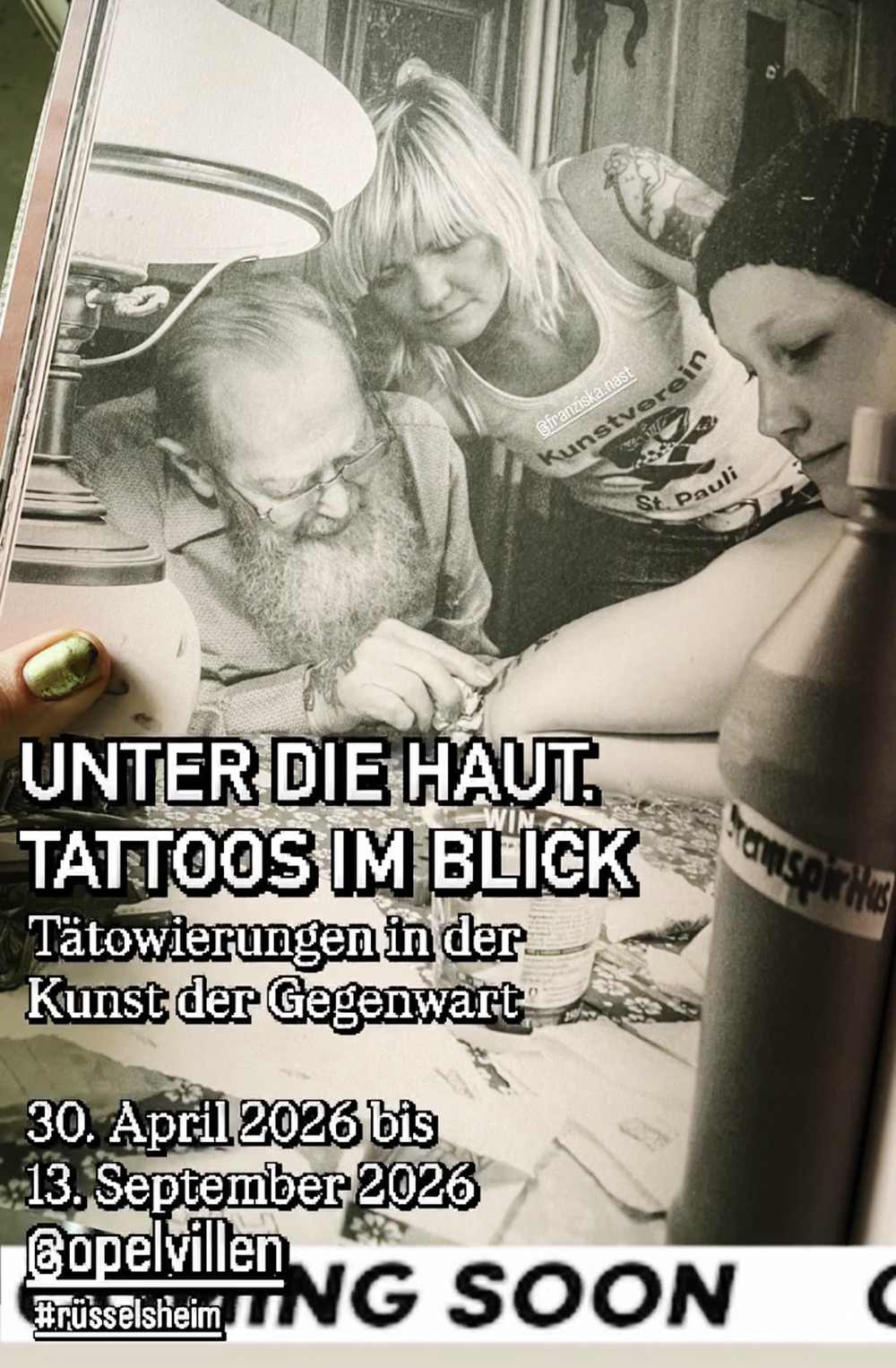
»Unter die Haut. Tattoos im Blick« Tätowierungen in der Kunst der Gegenwart
Kunst- und Kulturstiftung Opelvillen Rüsselsheim
30. April – 13. September 2026
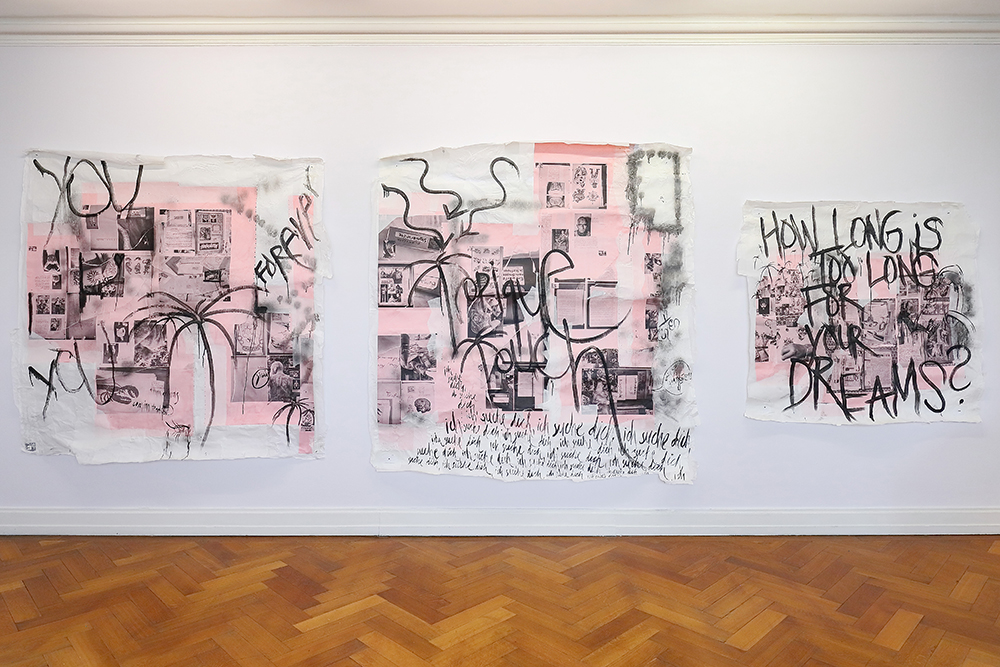
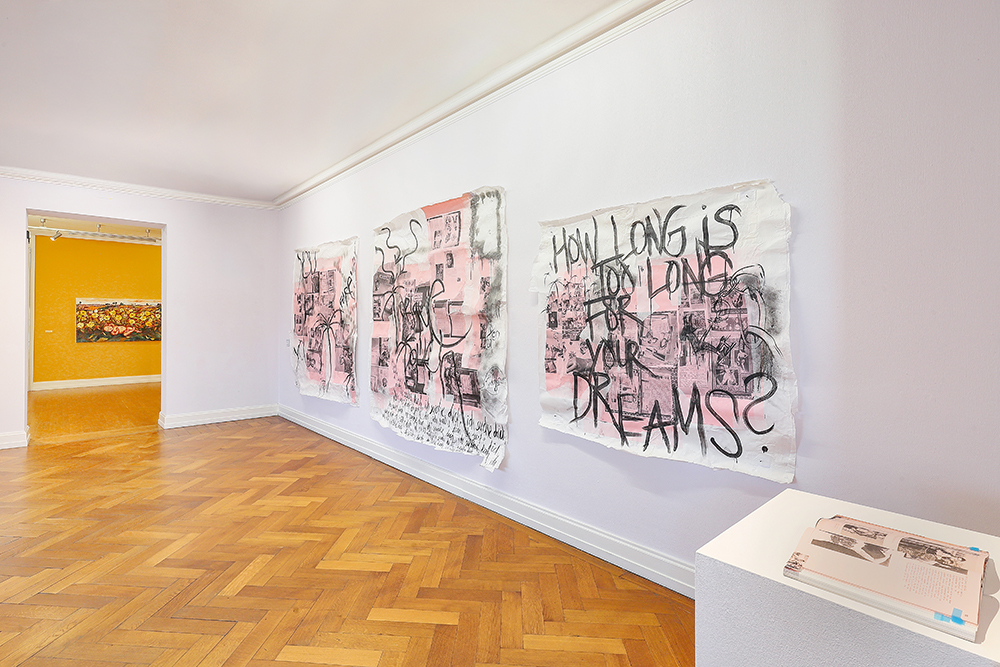
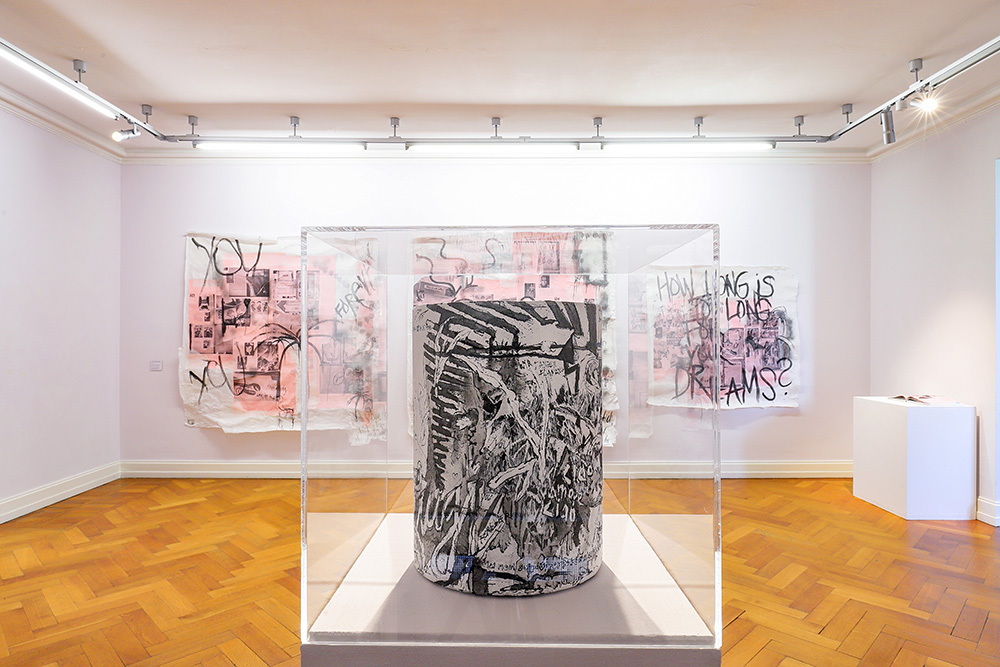
Triptych:
»YOU YOU forever« (Fleischteil I)
»Tropique Touch« (Fleischteil II)
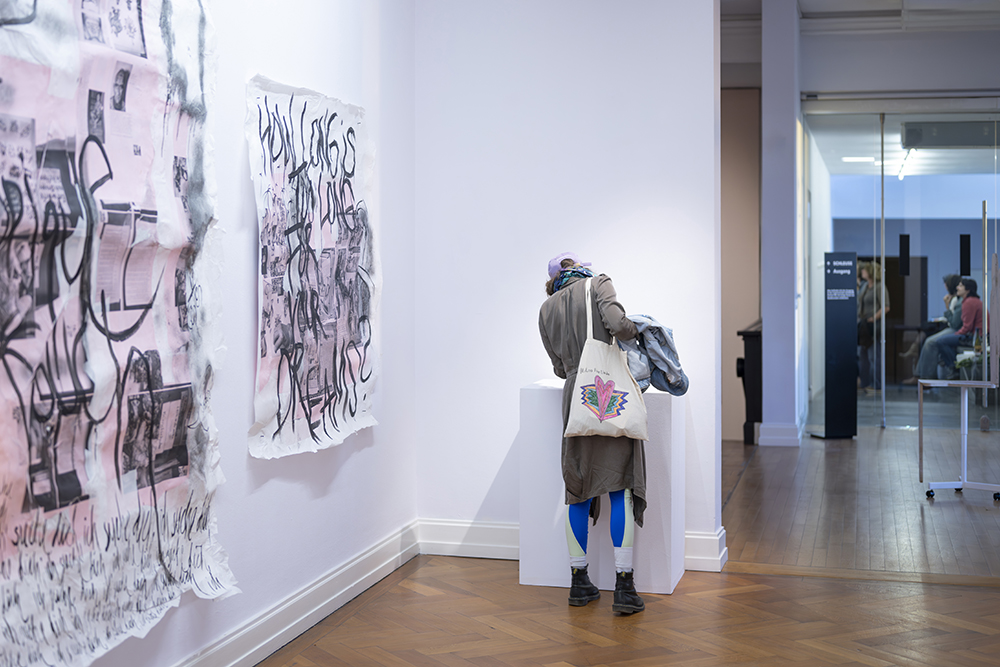
»How Long Is Too Long for Your Dreams?« (Fleischteil III)
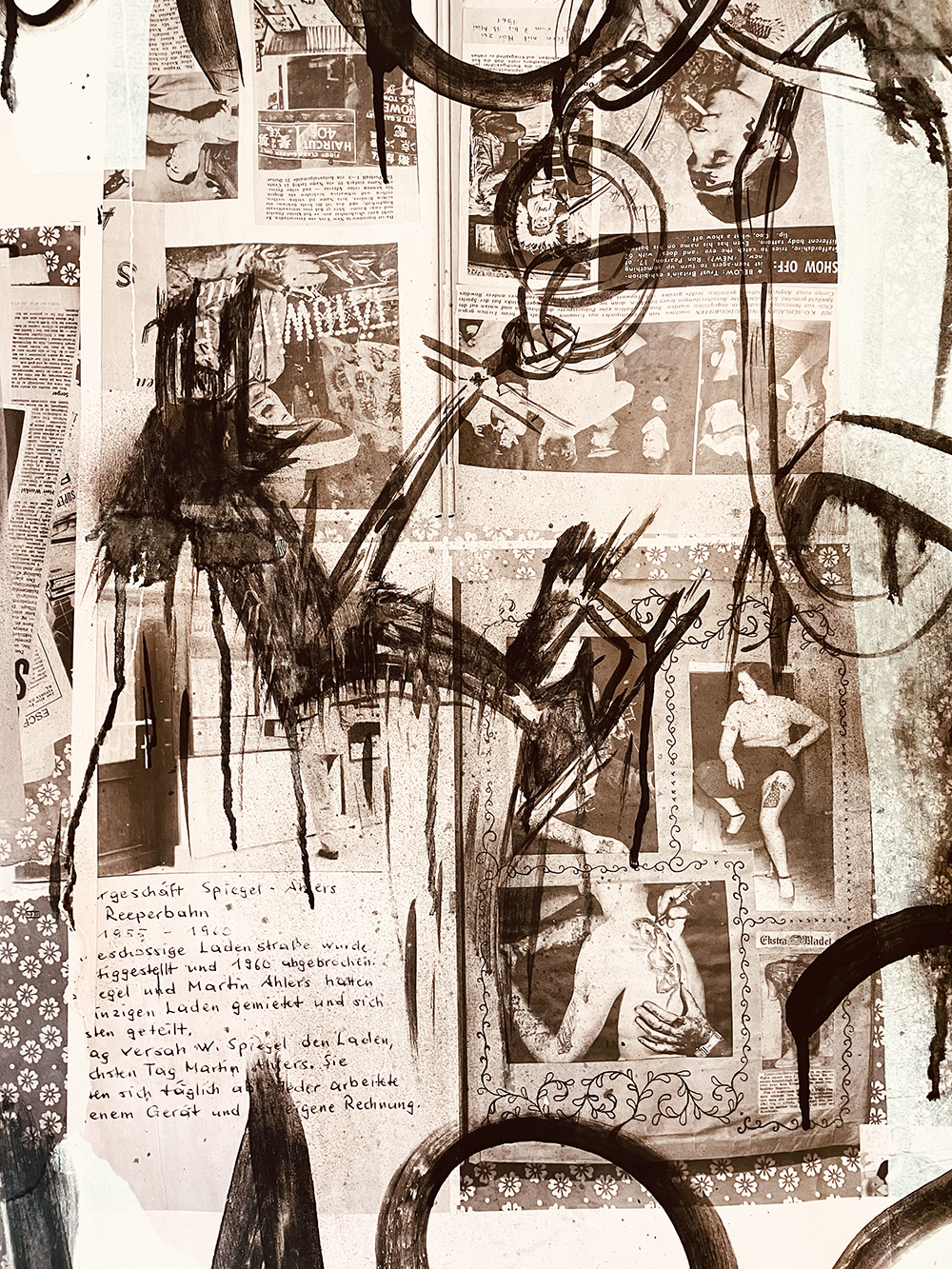
Laser copies pasted onto rice paper
160 × 200 cm
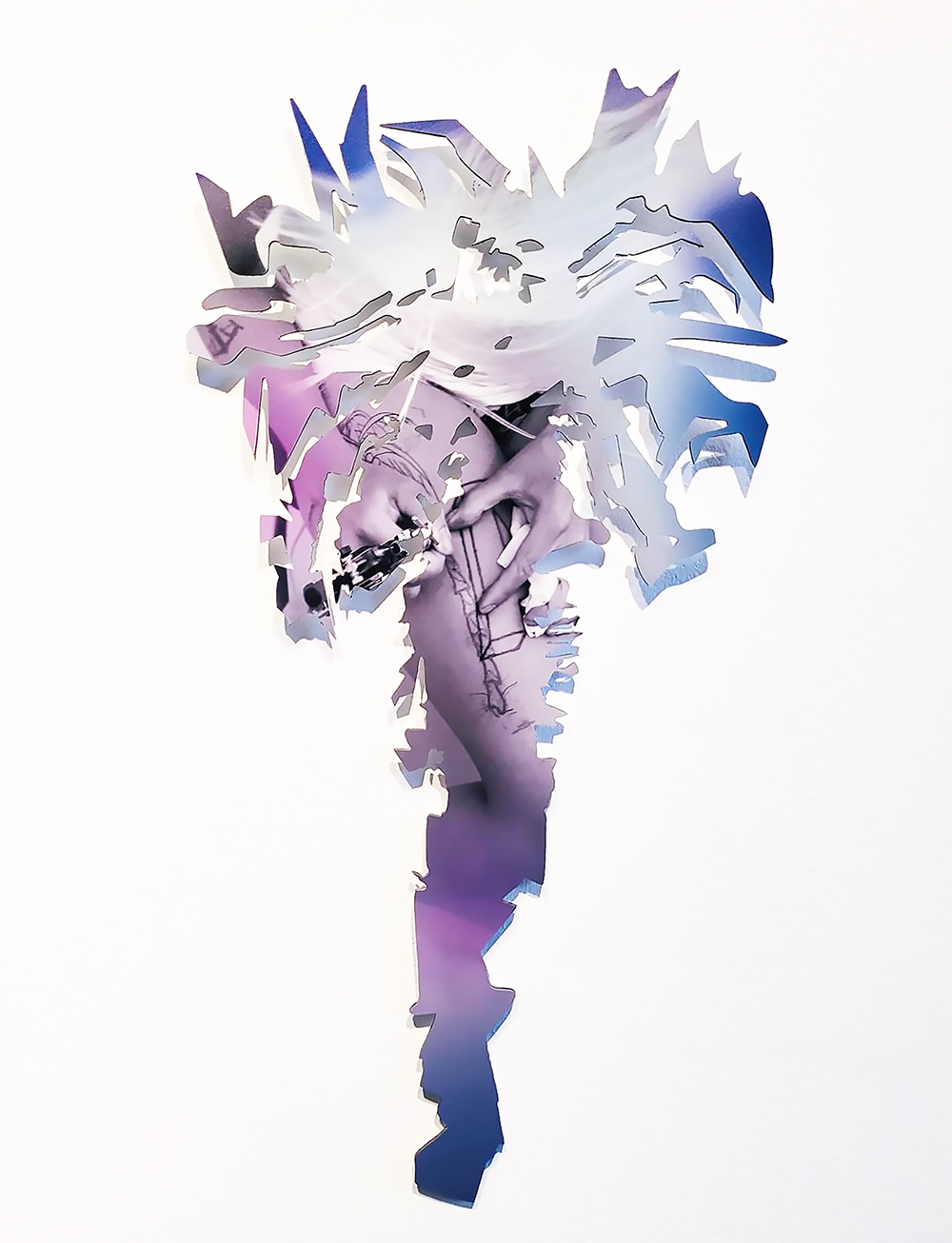
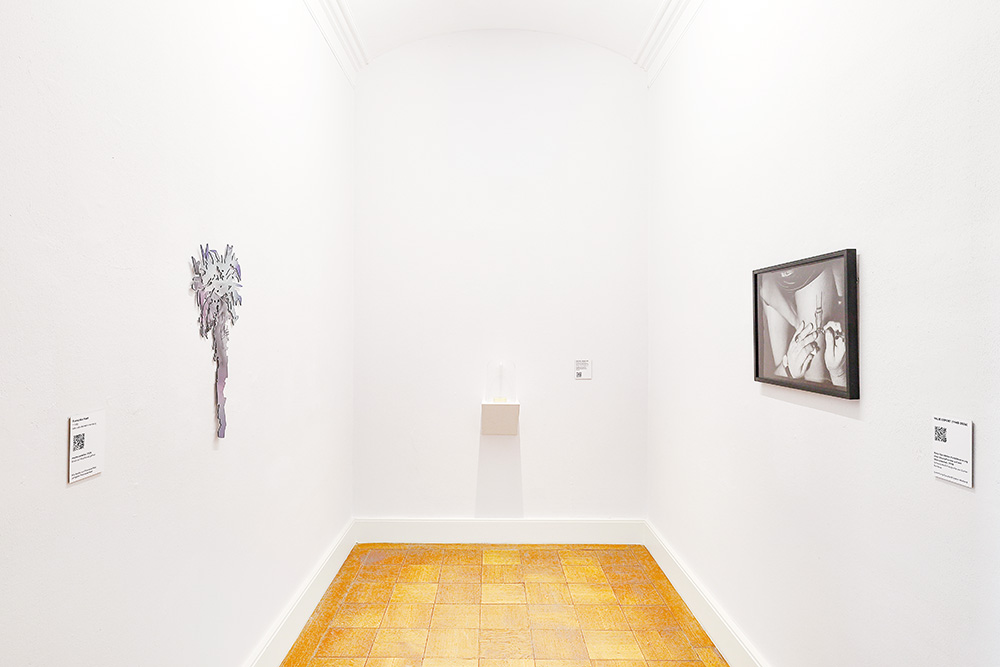
»Maybe Paradise«, 2024
Print on aluminium composite panel (Dibond), milled
70 × 40 cm
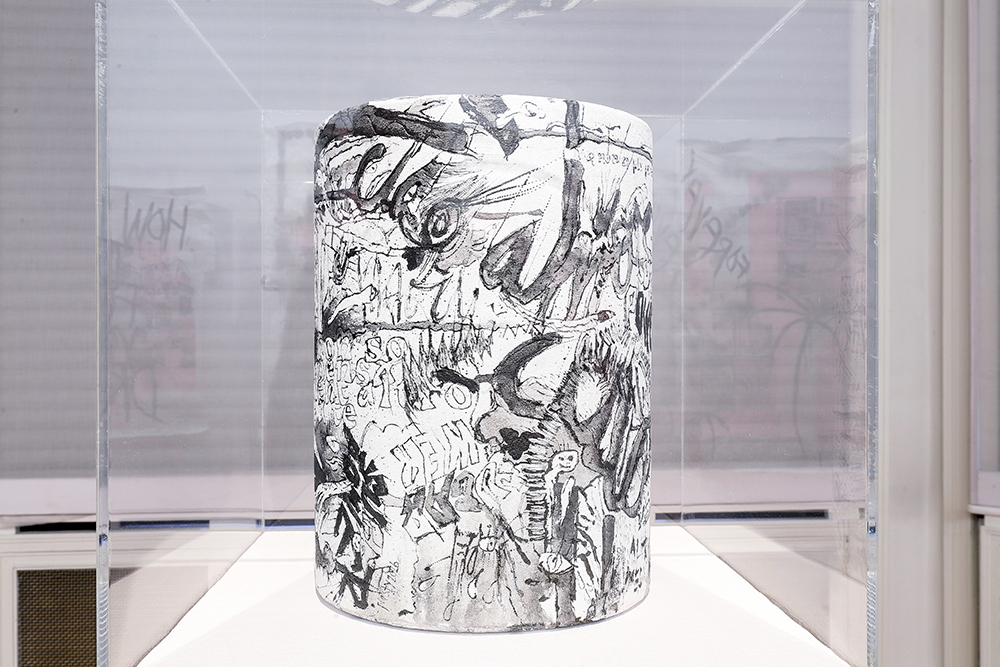
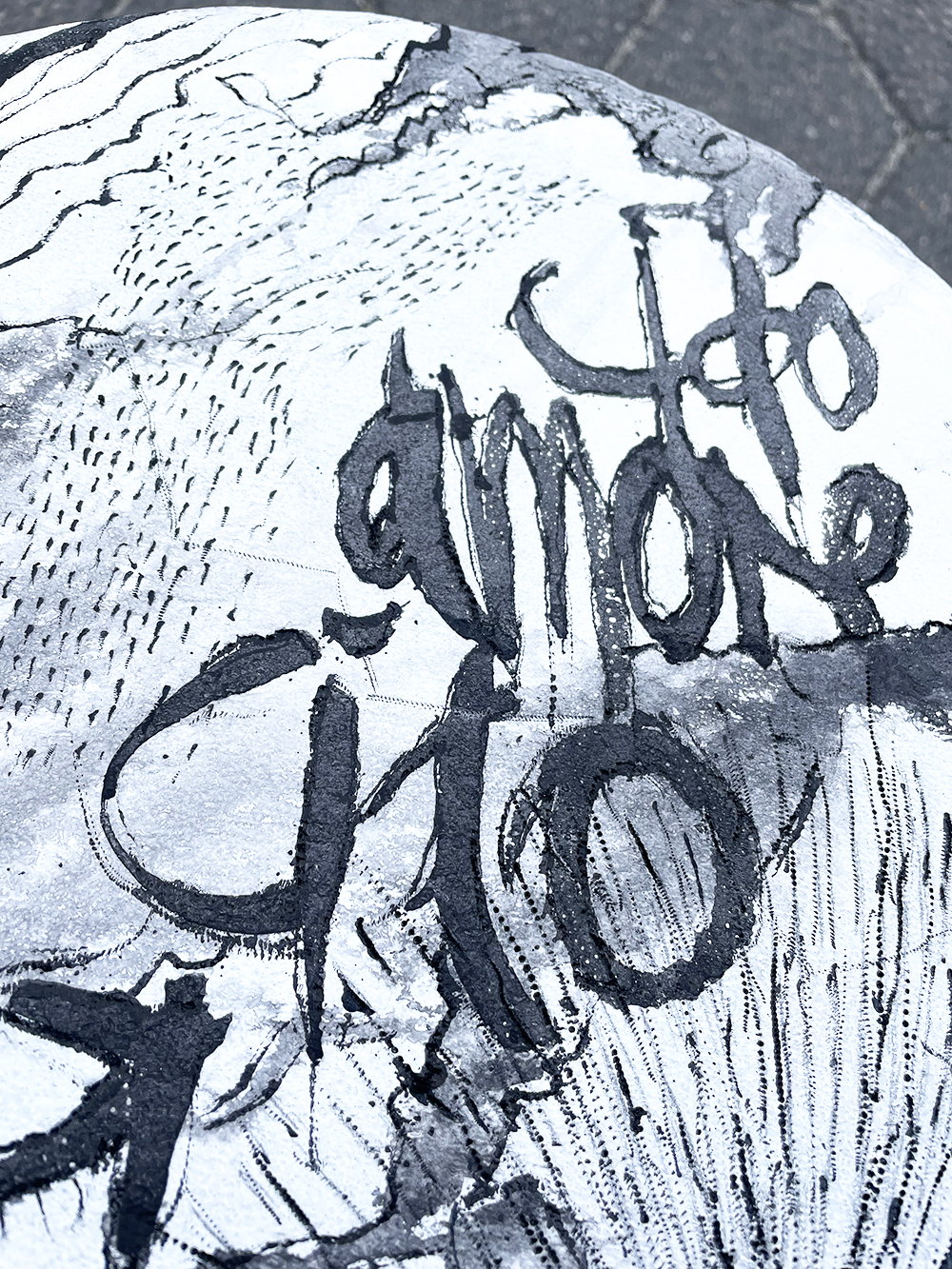
»Ciao amore ciao«, 2026
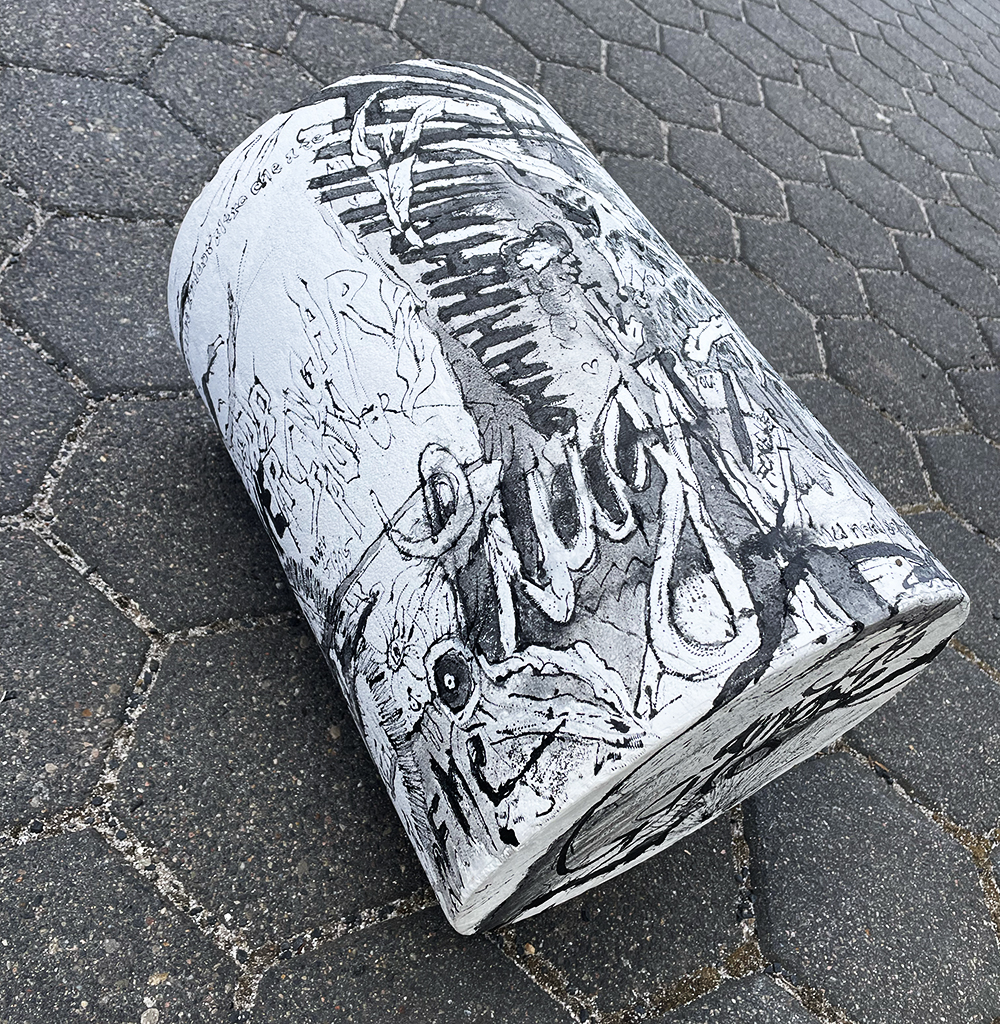
Artist’s urn
Climaflex, ink, tattoo ink
Height 60 cm, diameter 35 cm
600 g
.
.
.
»Der Fleischteil«
Franziska Nast’s so-called paper elements are oversized paper objects applied directly to selected walls. She has developed a specific technique in which several layers of different papers and paste are built up on top of one another. After a prolonged drying process, the layers can be peeled away from the wall, much like skin.
Nast understands these resulting paper elements as skins: material traces and imprints of a particular space. Although originally attached to the architecture, they remain flexible after removal and can be carried, transported and reinstalled elsewhere. They retain traces, residues and memories of the places they once occupied. The accompanying video documents this process.
Unlike her earlier works, these paper elements no longer feature large-scale, enlarged drawings. While Nast previously drew extensively on the imagery of »Alice in Wonderland«, her focus has shifted towards questioning scale and perception: digital and analogue, two- and three-dimensional, surface and object. The viewer’s physical relationship to the work becomes central: Where do I stand? How do I encounter an object? What does its oversized scale do to my perception?
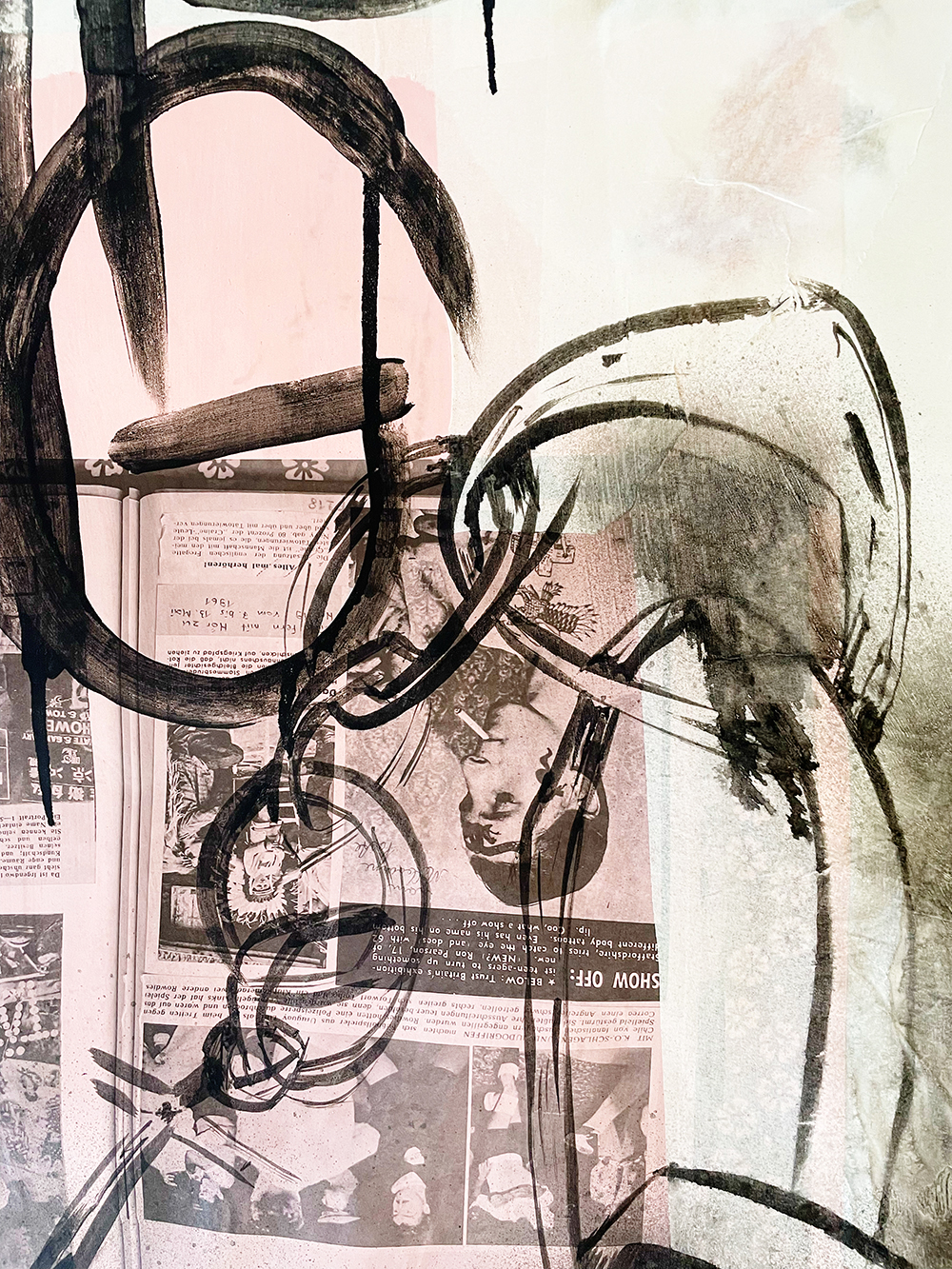
A central body of work is the so-called »Fleischteil«, which originated in an exhibition in Bayreuth. The presentation features torn, pink fragments on the paper skins, remnants of a wall installation first shown there, in which Nast introduced the »Fleischteil«.
The pink surfaces consist of numerous text fragments and images drawn from the extensive archive of her mentor Herbert Hoffmann. They include drawings, handwritten notes, personal records and photographs – intimate documents reflecting the close relationship between Nast and Hoffmann. Nast learned tattooing from him and spent many years visiting and working with him at his home in Switzerland, where, among other things, he tattooed an anchor on her.
As a tribute to this special friendship, Nast had previously incorporated a »Fleischteil« into her extensive artist’s book »Reality«: a pink section recounting their shared history. Surplus printed pages from the book were later transformed into the so-called »Fleischwand« in Bayreuth. Following the exhibition, the wall was reworked, removed and eventually transformed into three separate paper skins, which were subsequently reinstalled.
»Maybe Paradise«
»Maybe Paradise« depicts a palm tree, a recurring and central motif in Franziska Nast’s work. She engages extensively with plants, particularly palm trees, which function as multilayered symbols of longing, projection and hope.
The palm tree evokes Christian symbolism as well as nautical and maritime contexts. It stands for the promise of paradise, distant places and new beginnings, for what lies beyond the horizon, for a touch of green amid the northern bleakness. At the same time, it embodies a fragile notion of idyll – a dream of paradise set against the grey, functional everyday office life of Europe. Within this tension between promise and reality, the palm becomes an image of vulnerability.
Formally, the work is based on a drawing by Nast, translated into aluminium composite material (Dibond) and precisely milled. At the same time, the object reproduces a photographic image based on a photograph of a self-tattoo. Nast tattooed a palm tree onto her own thigh. Drawing, object, photography and body are directly intertwined.
The palm tree thus appears in multiple forms – as a drawing, a milled object, a photographic image and a permanent mark on the skin. Meaning and form condense into a continuous loop of repetition.
A palm tree is a palm tree is a palm tree.
»Ciao amore ciao«
The urns are offshoots of Franziska Nast’s monumental column installation »How Long Is Too Long for Your Dreams?«, shown at the Arp Museum. While the columns appeared as oversized body parts, the urns translate this visual language into an intimate scale – condensed fragments of the body.
The columns were entirely tattooed using a traditional tattoo needle, as if they were real skin. Building on this practice, Nast developed an artist’s urn in collaboration with Finale Form, as part of the »Edition Leben«. The urn is already sealed.
Its surface combines fragmented texts, spontaneous verbal outbursts, emotional notes and associative language. Drawing on cut-up techniques, song lyrics and the language of the Beat Generation, these fragments preserve memories and fleeting moments rather than telling linear stories.
The title itself refers to a song by Luigi Tenco, as does the phrase »Mi sono innamorato«. Music, language and personal memory become permanent inscriptions.
Recurring motifs include suns, palm-like structures and plant-like arms embracing the urn. The fine tattoo needle engraves the Climaflex surface, revealing the silver beneath its white coating and creating delicate, relief-like marks.
The urn becomes a tattooed body – a vessel for images, texts, memories and time, suspended between artwork, functional object and personal memorial.
»Second Skin«
On 2 July 1970, VALIE EXPORT performed Body Sign Action in Frankfurt, having a red-and-black garter tattooed onto her thigh. This permanent inscription became a feminist intervention against socially constructed notions of femininity and the external control of the female body.
Exactly 56 years later, on 2 July 2026, Franziska Nast revisits this historic gesture with her work Second Skin. Through self-tattooing and wallpapering walls with photographic images, she transfers the act of inscription from the body to the exhibition space. Paper becomes a second skin, the wall a bodily surface.
A dialogue emerges between VALIE EXPORT’s feminist body politics of 1970 and Nast’s contemporary exploration of tattooing, identity, self-determination and the transformation of body and space.
VALIE EXPORT: Body Sign Action, 2 July 1970
Franziska Nast: Second Skin, 2 July 2026
Fotos: Frank Möllenberg, Tatiana Vdovenko, Franziska Nast